↔
CROWN & BRIDGEZIRCONIA / EXOCAD DENTALCAD

DIGITAL DENTAL DESIGN STUDIO — GLENDALE, CALIFORNIA
Where Dental Experience Meets Digital Precision. Outsourced dental CAD design for laboratories and clinics — crown & bridge, implant, abutment and anterior cases designed in exocad and 3Shape from your STL, PLY or DCM scan data.
CALL (213) 550-8313 →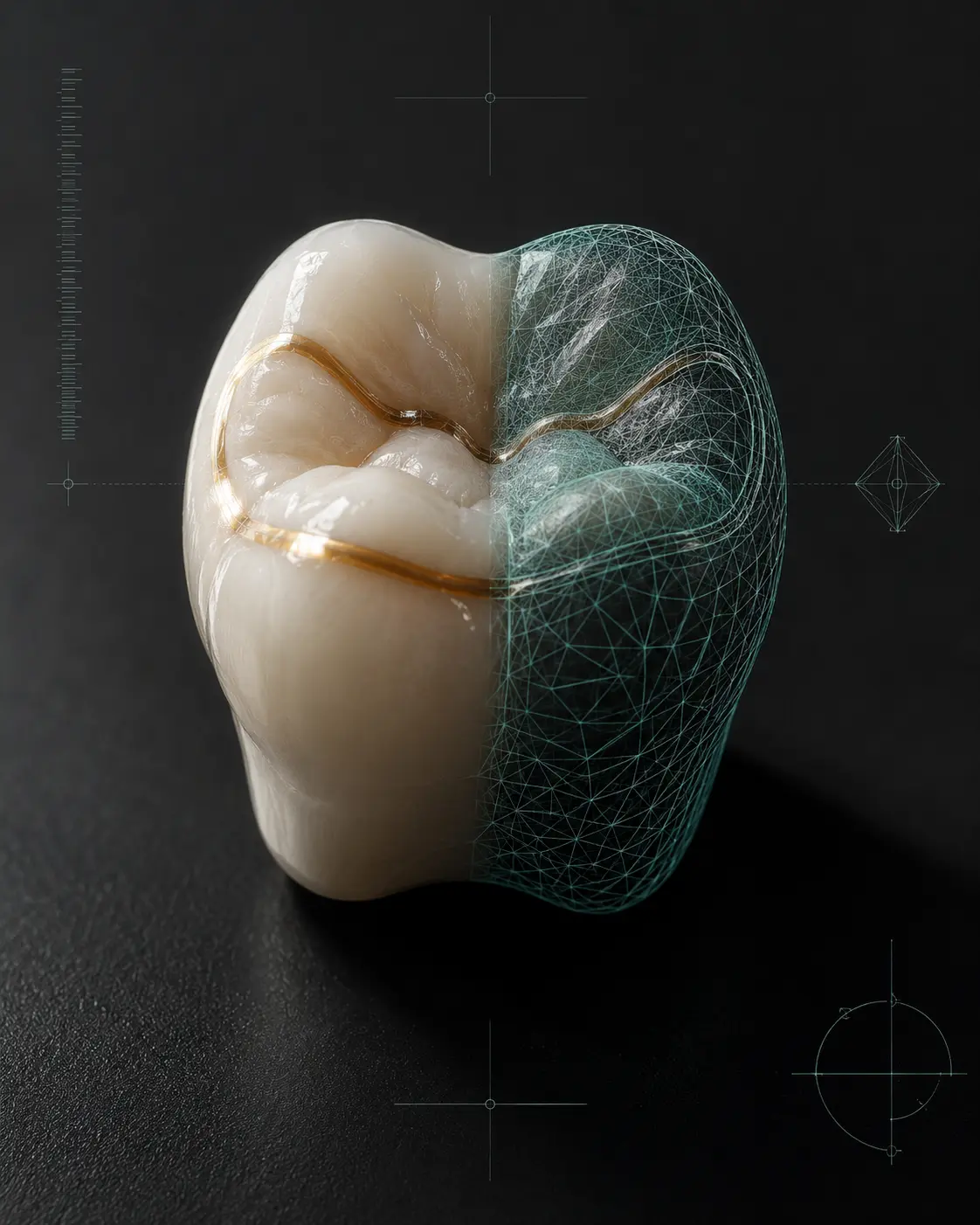
DESIGNED IN EXOCAD AND 3SHAPE — STL, PLY, OBJ AND DCM IN, MANUFACTURING-READY STL AND PROJECT FILE OUT
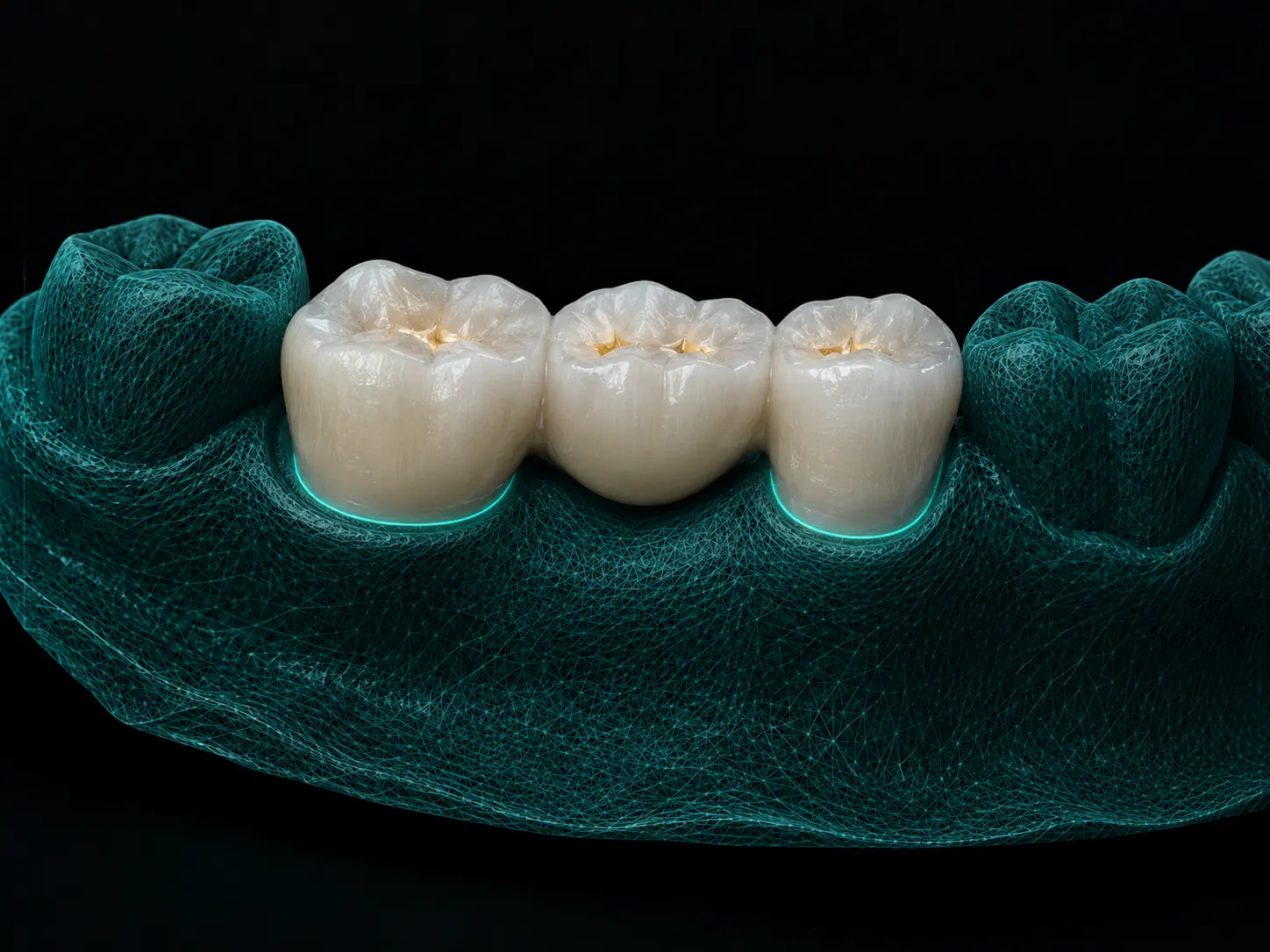
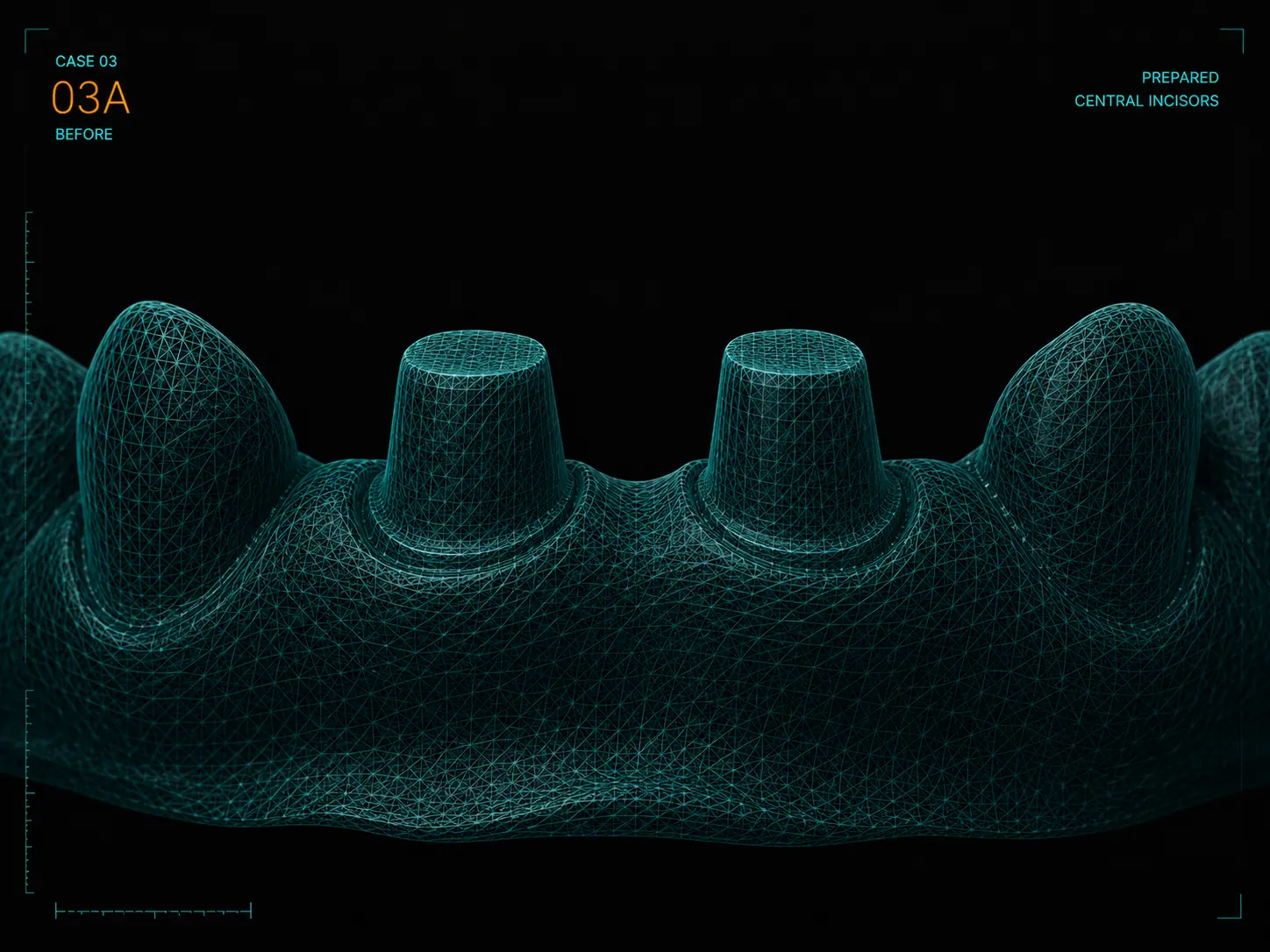
Every unit starts at the margin: the finish line is re-traced by hand against the unsectioned scan, the insertion axis set so undercuts resolve without over-blocking, and proximal and occlusal contacts set numerically to your lab's preferred tightness.
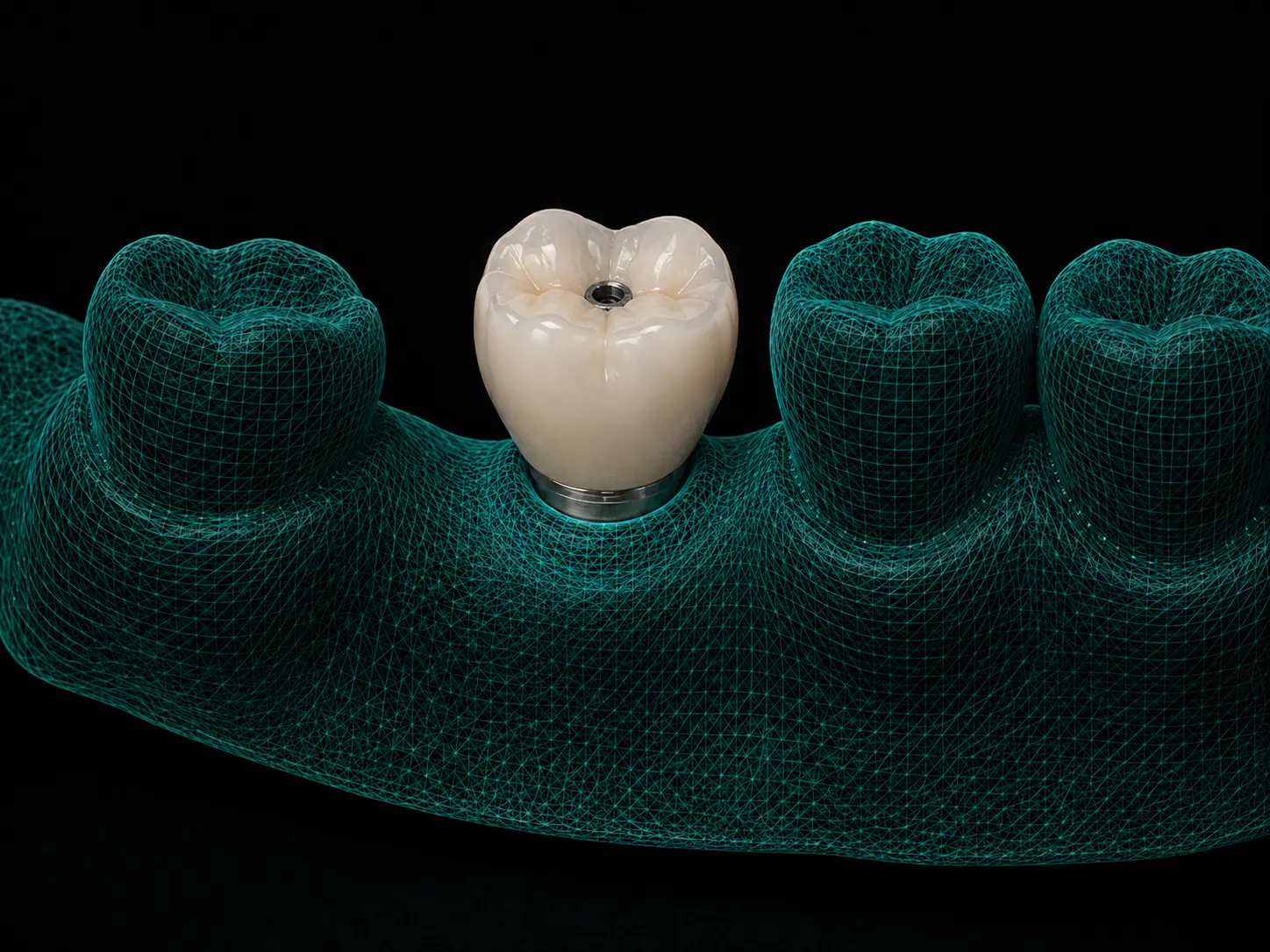
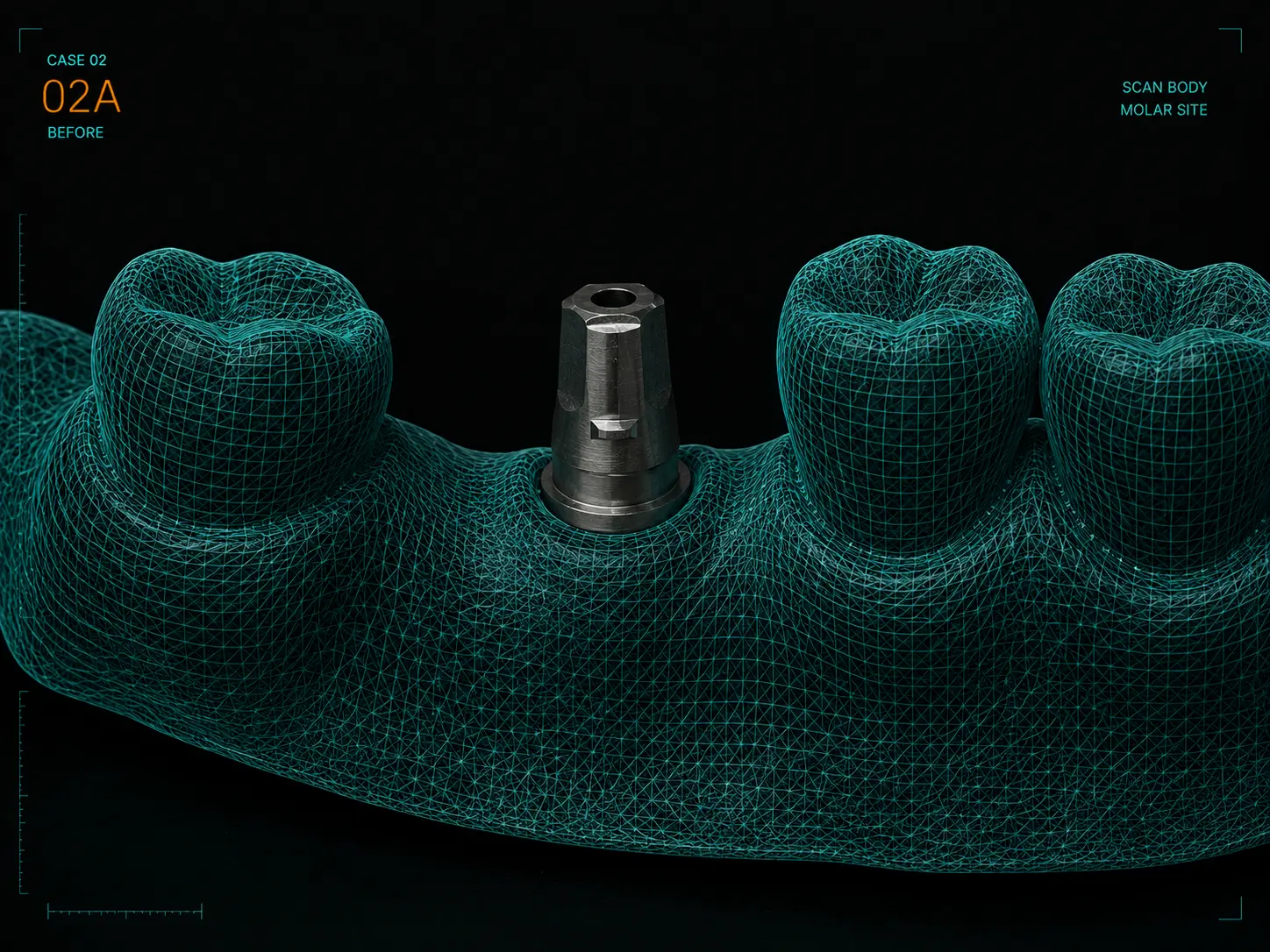
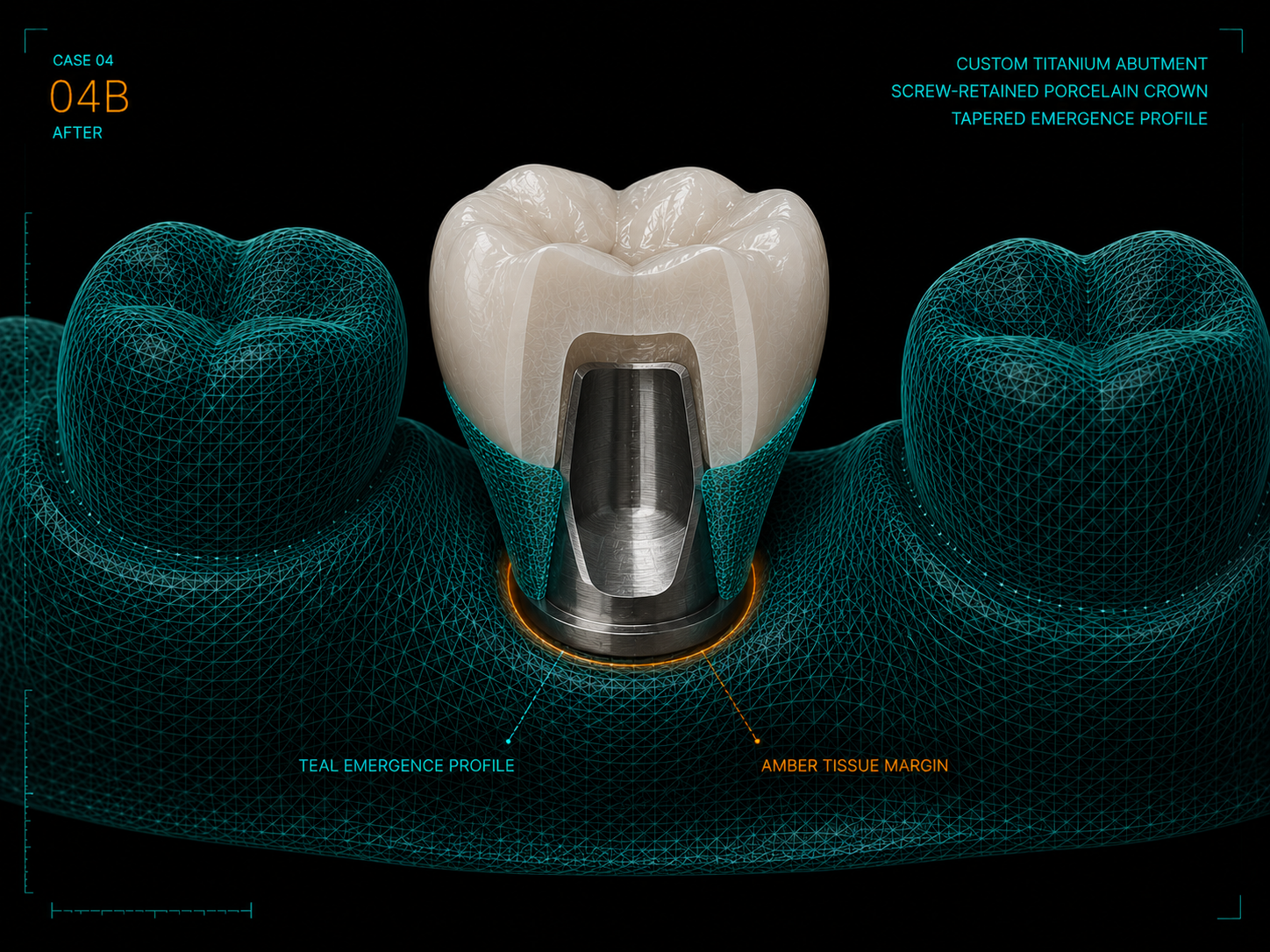
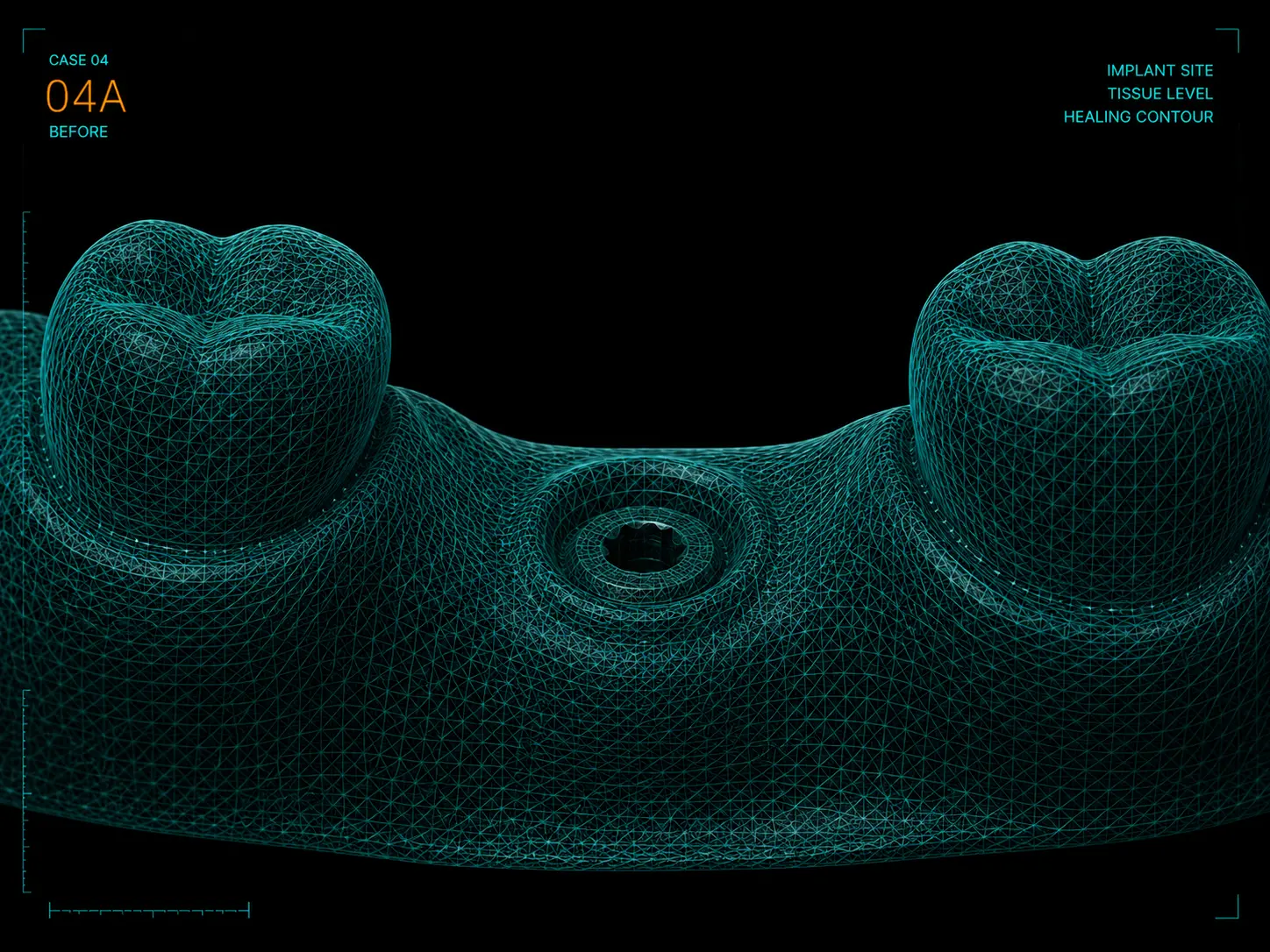
The scan body library is confirmed against the system you actually seated before a single surface is built, screw channel angulation is checked against the ti-base tolerance, and emergence is shaped from the healing contour in the scan rather than a generic library curve.
Abutment design is tissue management. Margins are placed to the tissue you scanned, the emergence tapered so the crown seats without blanching, and ti-base bonding surfaces left untouched at library specification.
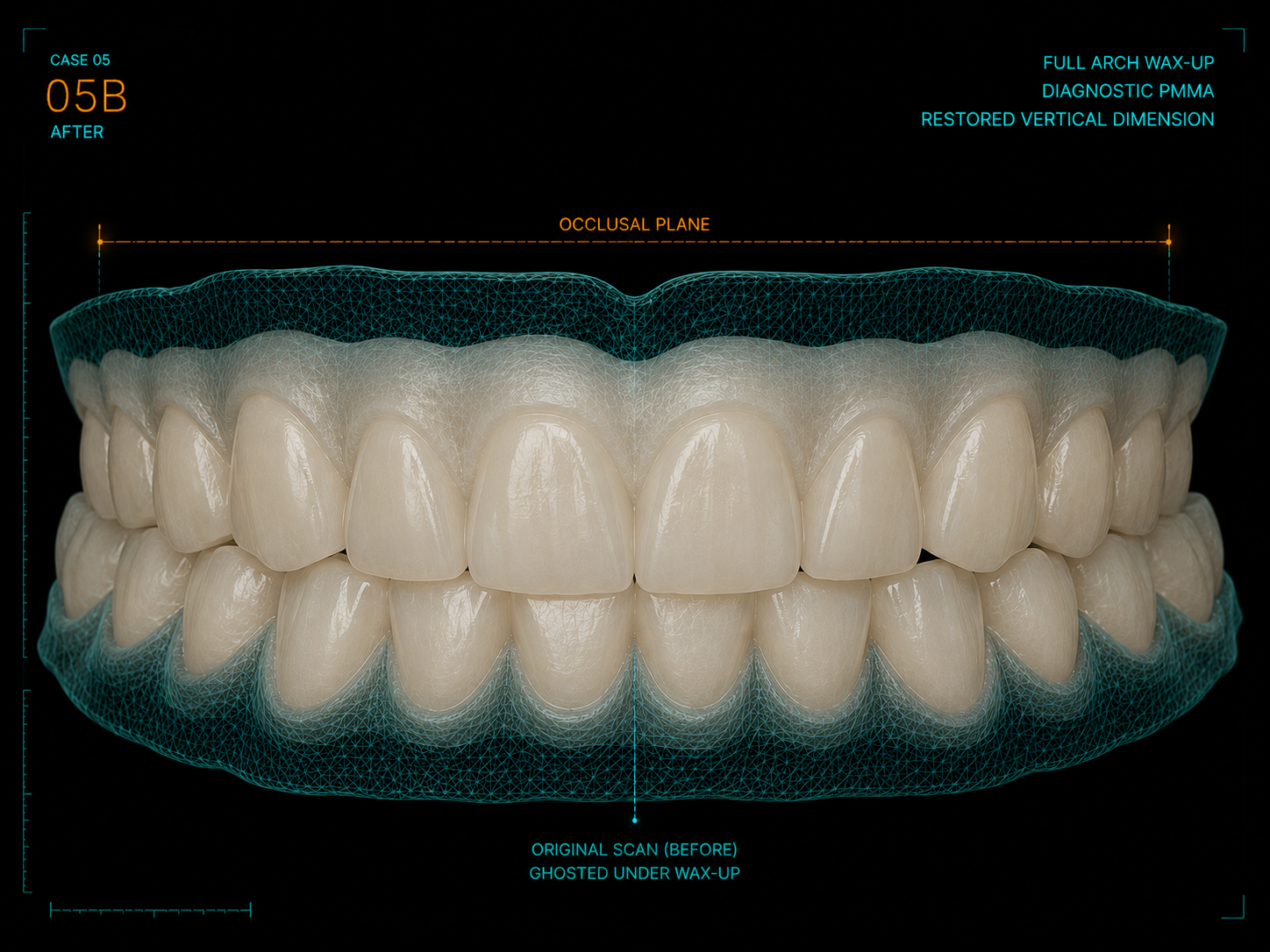
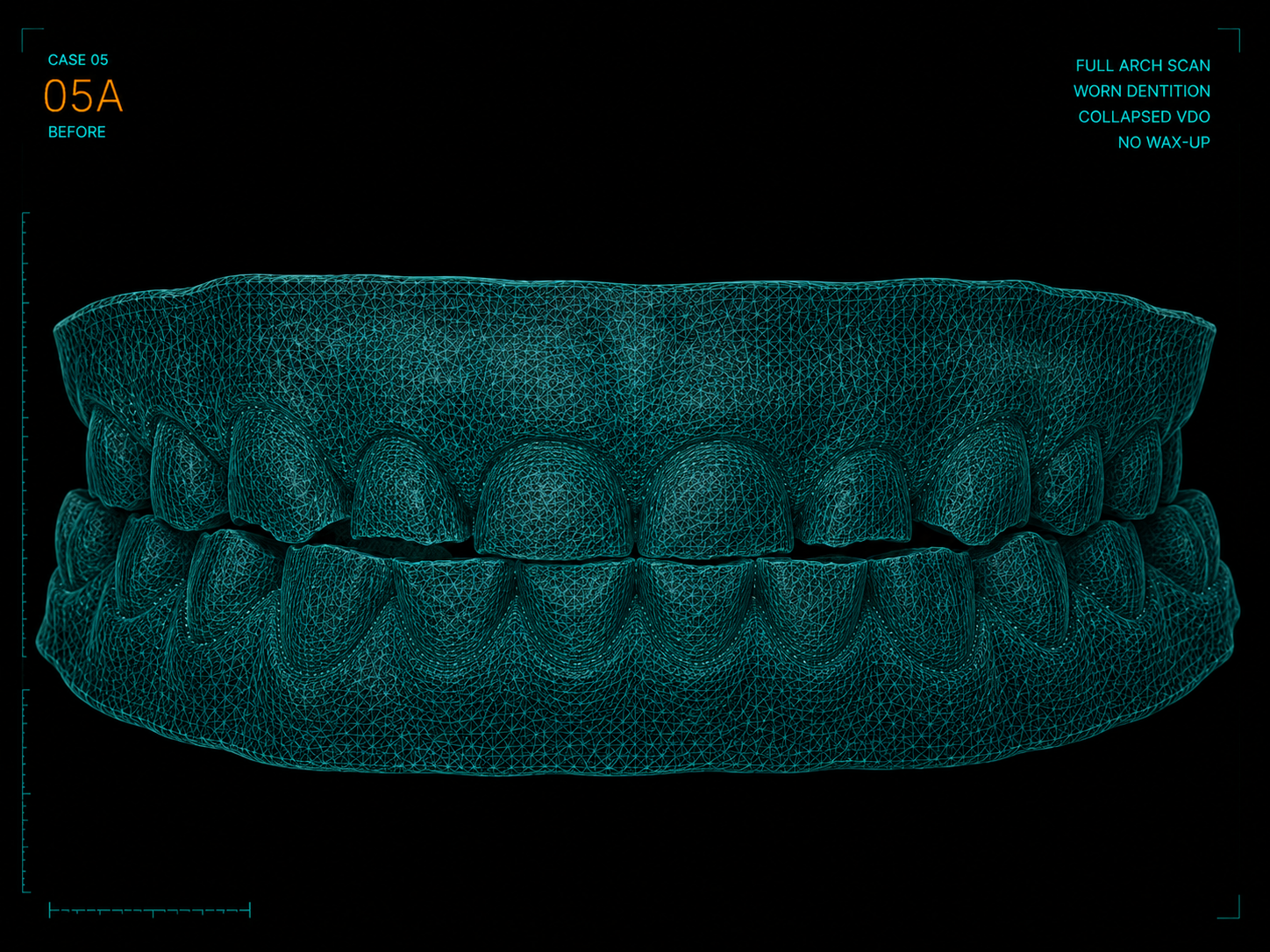
Diagnostic wax-ups built to be milled in PMMA and tested in the mouth — designed to the planned vertical dimension, kept reducible, and returned with the geometry your production floor needs for a matrix or reduction guide.
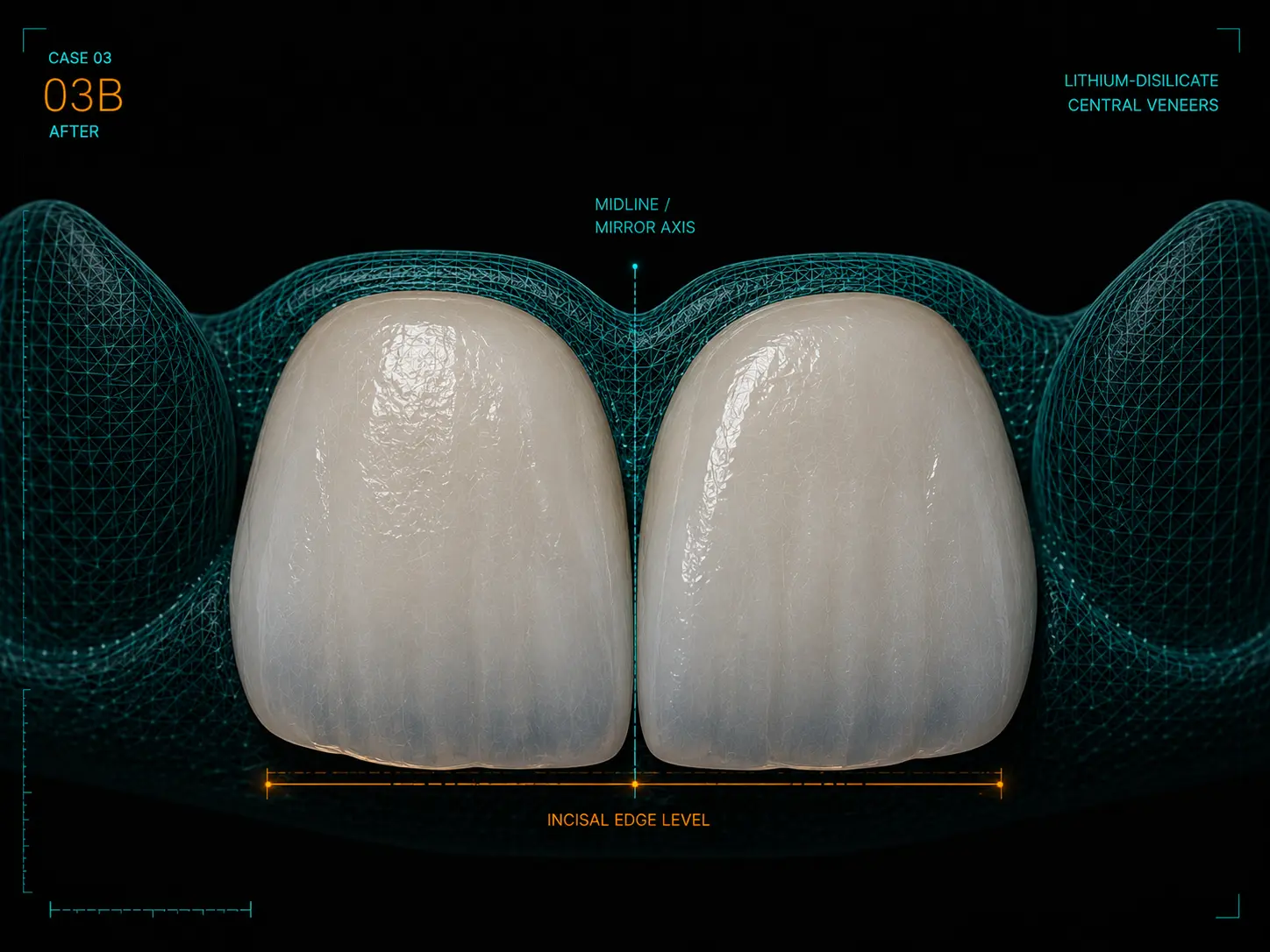
Anterior work does not survive automation. Incisal edge position first, then line angles and facial lobes to control perceived width, mirrored from the contralateral only where the mouth is genuinely symmetric.
Cusp inclines that direct force down the long axis, wall thickness held to the minimum your chosen material demands, and connector cross-sections validated before export so the case mills clean and adjusts less at the chair.
For full-arch and multi-quadrant work the whole treatment is planned before any of it is designed: prosthetic space, occlusal scheme, staging across provisional and definitive phases, and a written file plan.
Your STL, PLY or DCM files land in the case folder. Mesh integrity is checked, the antagonist and bite record confirmed present, and the implant library verified before anything else happens.
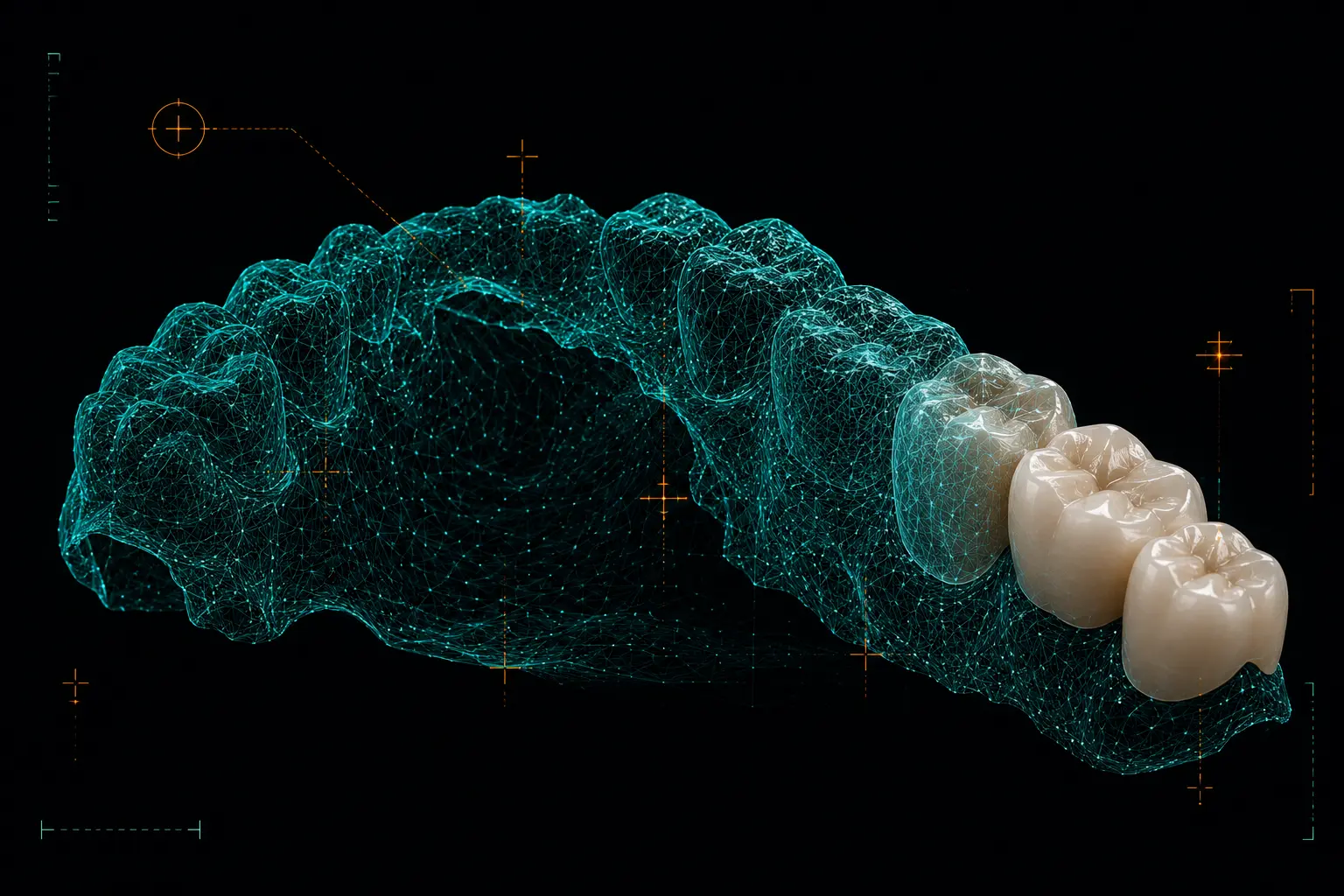
Auto-detection runs, then a technician re-traces the finish line by hand against the unsectioned scan. The insertion axis is set and undercuts resolved rather than blocked out.
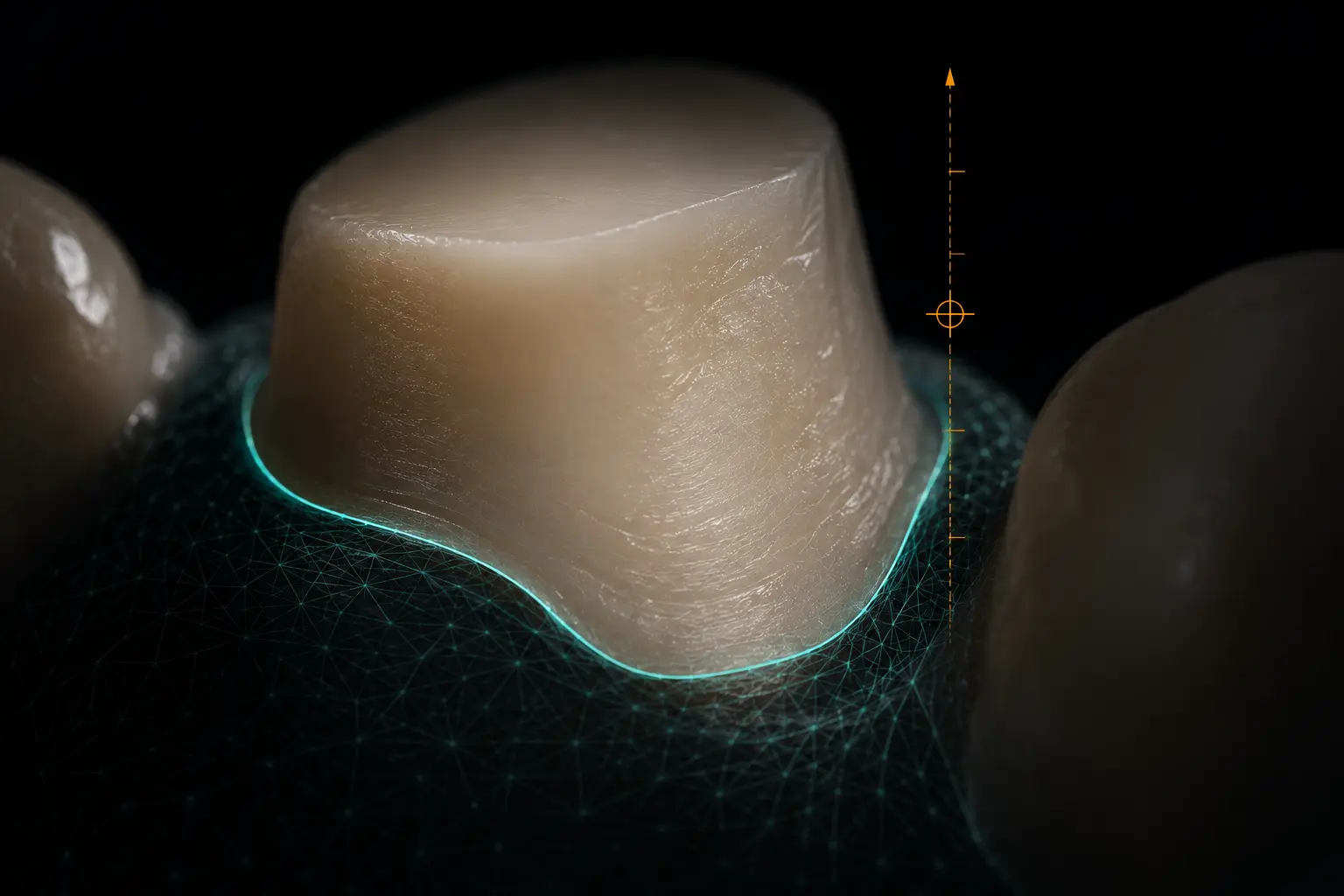
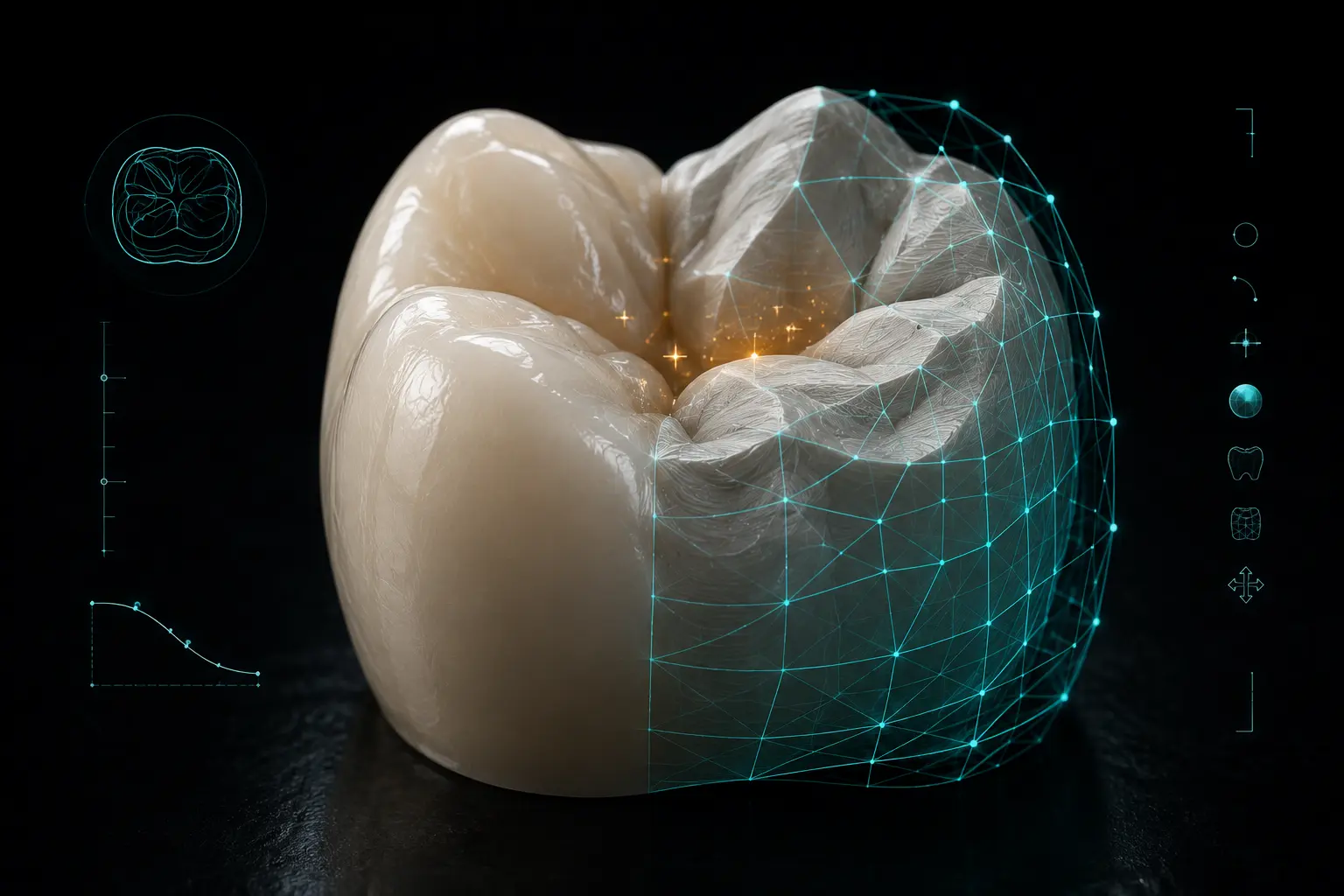
Library selection, then free-form sculpting. Cusp inclines, marginal ridges and emergence profile are shaped to the case in exocad or 3Shape, not dropped in from a preset.
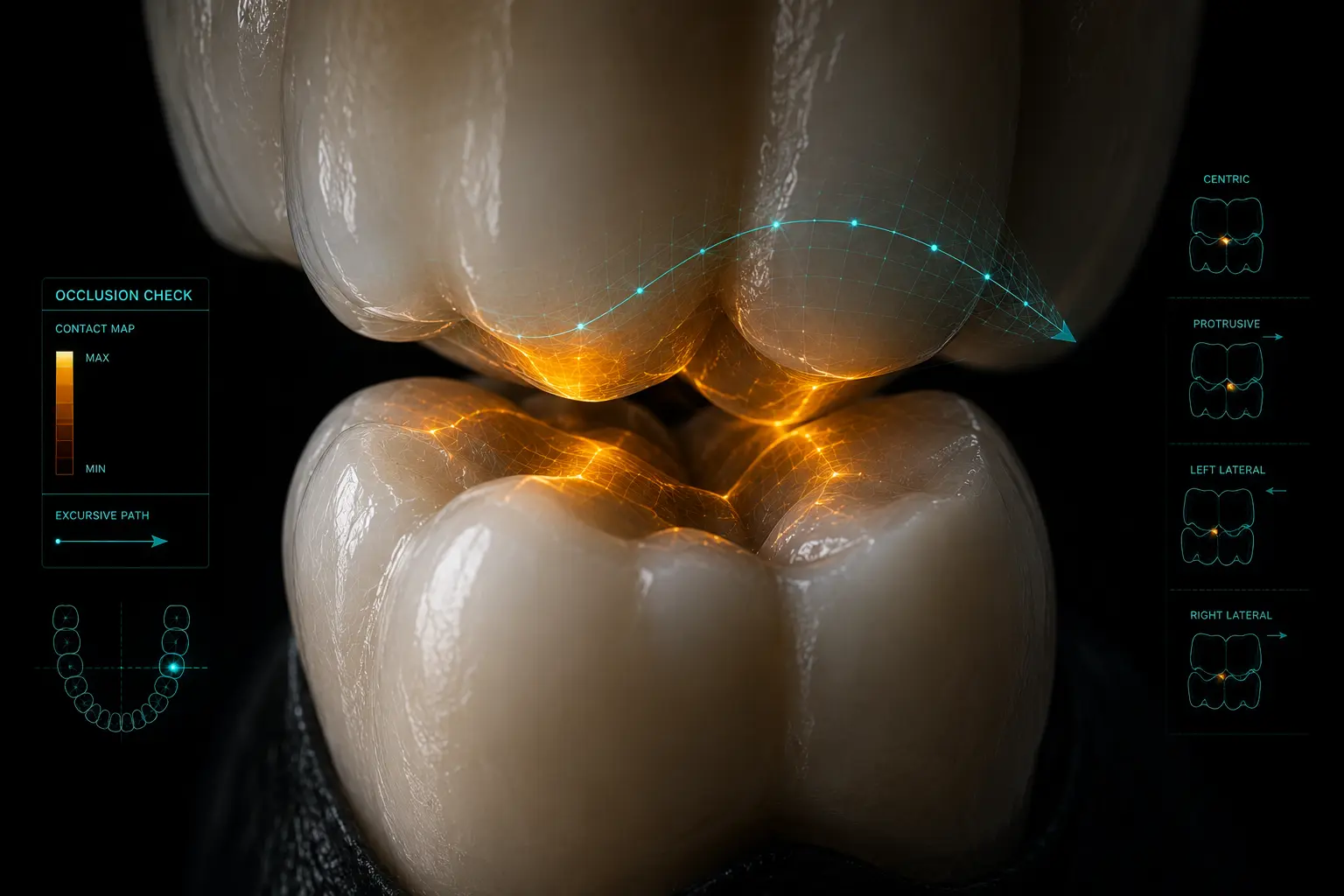
Proximal and occlusal contacts are set numerically and reviewed on a contact map. Excursive interferences are flagged and removed before the case moves on.
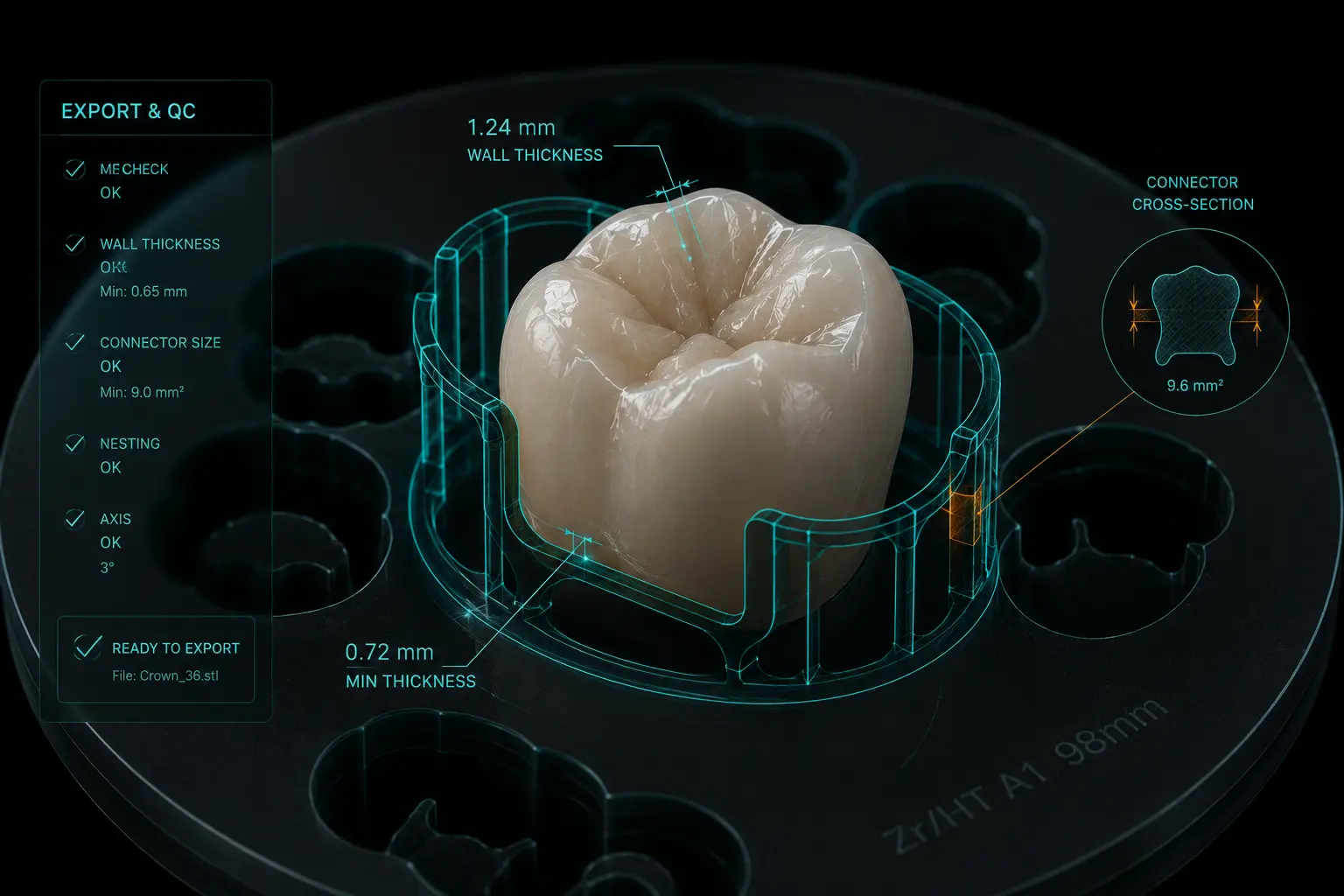
Minimum wall thickness and connector cross-sections are validated for the chosen material, then the case is exported as a nested-ready STL alongside the CAD project file and screenshots.
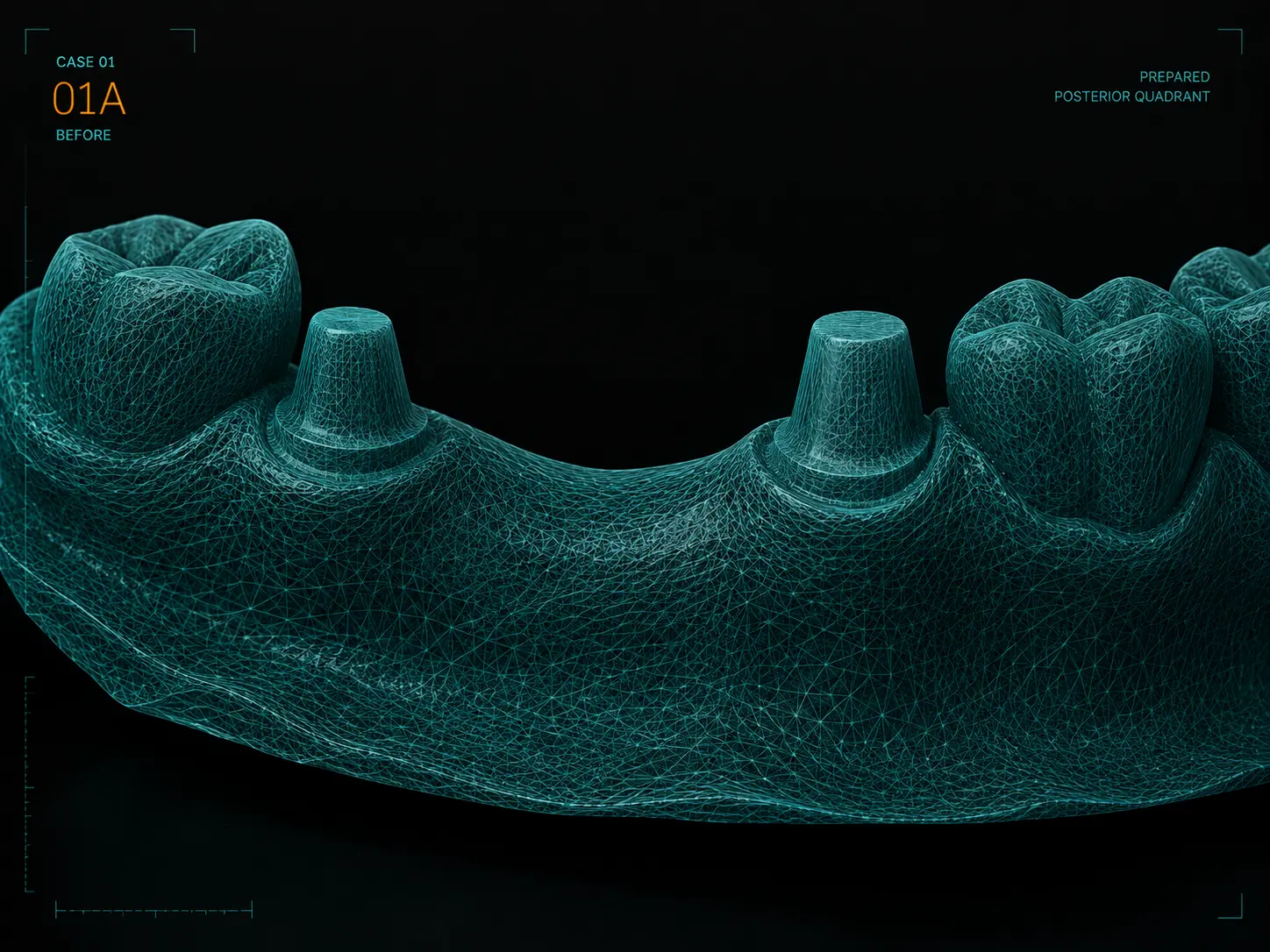
DRAG EACH COMPARISON TO MOVE BETWEEN THE INTAKE SCAN AND THE DELIVERED DESIGN
DESIGN STANDARDS / FILE EXCHANGE / PLATFORMS
Digital case submissions are accepted online at any time, so a case uploaded at close of business is margin-marked, built, occlusion-checked and exported as nested-ready STL while your floor is dark — and the files are in the folder when your bench comes back.
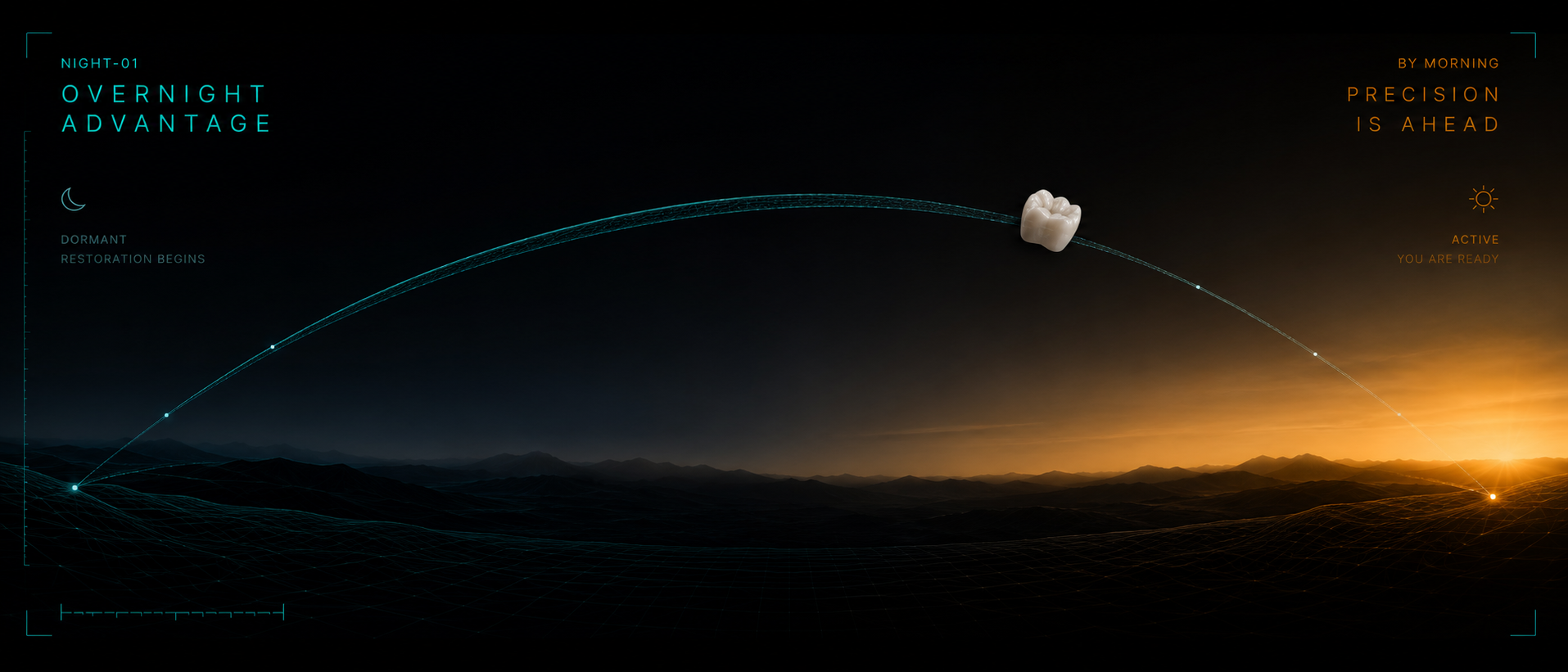
LAB UPLOADS AT CLOSE
DESIGN STARTS
QC & STL EXPORT
FILES WAITING AT OPEN
We are the CAD department a dental laboratory outsources. Your lab sends the intraoral or desktop scan and the case notes; we design the restoration — margins, emergence, anatomy, occlusion — and return manufacturing-ready files for your mill or printer. No production, no patient contact: design only.
CONTACT / GLENDALE, CALIFORNIA
STUDIO ADDRESS
GME Vision Studio
912 Norton Ave
Glendale, CA 91202, USA